
















If we stop and think about what it is we do the most on a daily basis it is, surprisingly, reading: stop signs, emails, iMessages, posts on social media. Words are all around us, yet we underappreciate them. Though our generation has its rare book lovers, not everyone knows the perks of such a hobby, whether it is for school purposes or pleasure. Plato says, “Books give a soul to the universe, wings to the mind, flight to imagination and life to everything.” And isn’t that the truth? Reading has so much more value than we might think; it is not just about the fun in reading itself. It’s how we amplify our minds, sharpen our views of the world, and even improve our health and relationships through it!
Reading, no matter the genre or reason, brings knowledge to our minds. First, you improve your vocabulary which is always welcome as a way of gathering a broader understanding of our language. Second, your mind delegates you to work on understanding plots, emotions and certain occurrences from a book that might be implied, but not exactly said straight to your face. Books have a funny way of making readers look in between the lines to dig deeper for the greater meaning, which helps us to have better reading comprehension for tests and classroom assignments. A recent study done by Columbia University’s Teachers College shows that students who read physical books have higher scores on reading comprehension tests. This goes to show how reading amplifies how our brains work. Take me for example, in 9th grade I scored 2’s on my reading comprehension tests like FAST, and PSAT’s but after I acquired reading as a hobby, my reading comprehension on these tests increased up to a 4! So when reading, you gain stronger critical thinking skills, vocabulary, and a broader reading comprehension, but that only happens if we exercise these skills — by reading.
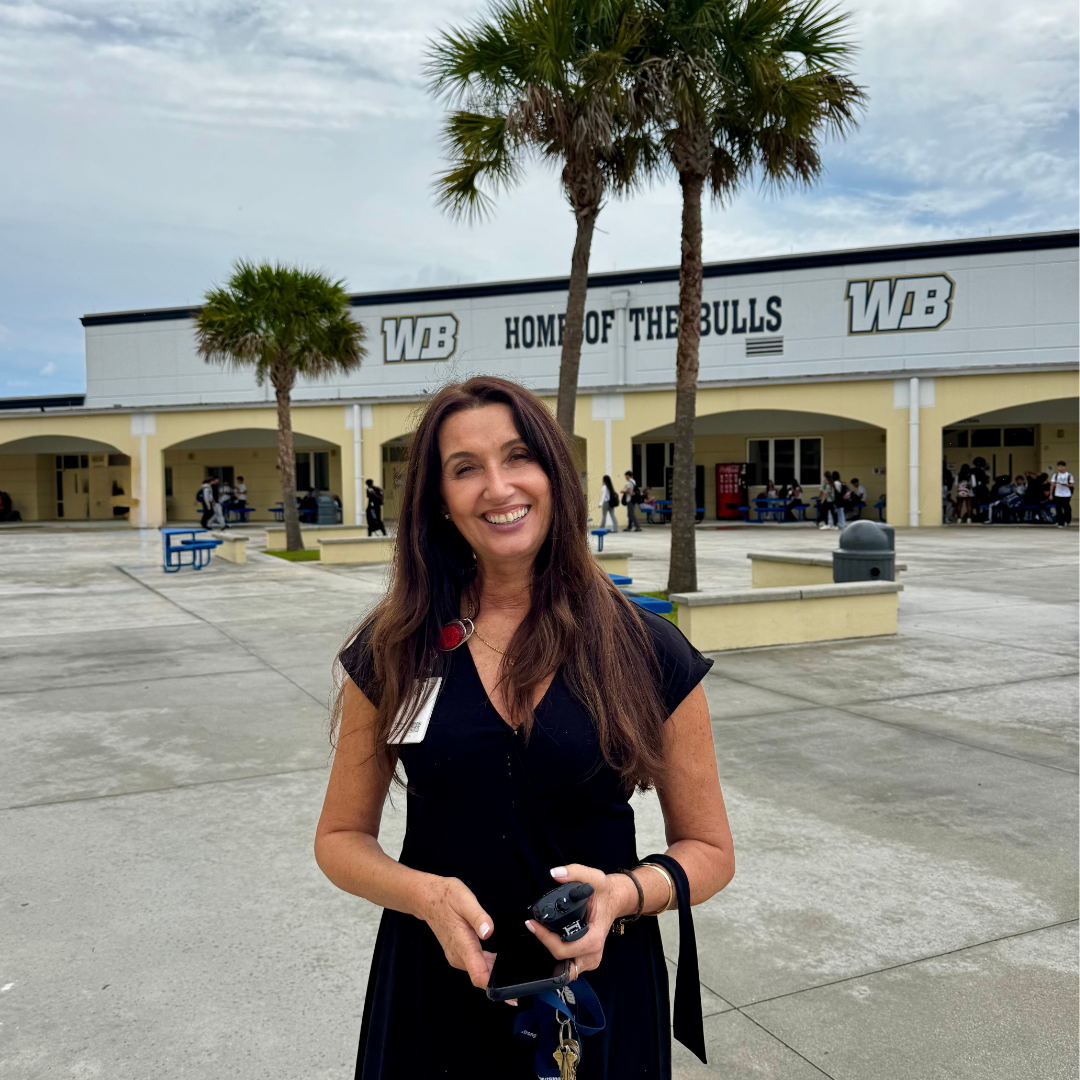
One example of a reader on our campus is Mrs. Steinberg, who teaches AICE Language and AP Lit. Her favorite author (among many) who captures her admiration the most is Toni Morrison because of her elegant syntax and powerful diction. Mrs. Steinberg believes that when we connect with our reading, we gain a richer background to understand more complicated ideas and situations. When we read from other people’s perspectives, it helps us see new ideas or realities that are not similar to our own, helping us develop more compassion and new ideas. There is so much to see in so little time, that is why Mrs. Steinberg loves reading; she gets to explore new places and lifestyles while she reads. She mentioned that when she read Into Thin Air, a nonfiction book by Jon Krakauer, she experienced the journey of mountaineering, and though she never desired to be one herself, she was transported when reading about such a thrilling but dangerous journey. Mrs. Steinberg loves words, and they are also why she loves reading so much; new words come to her with every new book, enhancing her vocabulary and, as a result, leaving her with a wider range of vocabulary to express herself as precisely as possible with the perfect word.
If you generally find yourself feeling stressed, anxious, or down, reading can be your antidote. A study done by the University of Sussex shows that six minutes of reading a day can reduce stress levels by 68 percent! We all know how life can get stressful with school, work, and midterm seasons! With reading people can alleviate a little of their stress. “Escaping” to a new reality can bring you to forget your problems for a few minutes… or hours. Like Alvin Toffler, an American writer and futurist once said, “A library is a hospital for the mind.” Books can help you escape from the chaos that life can bring. Through a place you’ve never been before, and a life you’ll never truly live other than in your mind, stresses can be forgotten while you are imagining new settings, faces, and feelings. If we are talking about lifelong advantages, reading can lower Alzheimer’s and memory loss risks going into the future. That happens because participating in brain-stimulating activities adds mental challenges to your routine, by reading, writing, and even solving word puzzles. All of those can help to preserve your brain’s health and stay clear of Alzheimer’s symptoms or problems with memory loss as you get older. The First Center For Alzheimer’s Research Foundation states that exercising your brain in activities that stimulate them from childhood to elderly ages, is important for brain health. So reading is a great tool to use, to help your memory stay as healthy as possible as you grow.
For instance, to Mrs. Whittaker, who teaches AICE Lang and English 3 Honors, finds herself most engaged in historical fictions, especially when the plot involves the Holocaust. She loves to read so dearly because of how it helps her to relax and gives her space to imagine places she can only dream of being someday. Reading allows her to understand other countries and cultures, learn about the struggles people experience in the world, and enhance her communication skills. She loves how a book can bring people together, including her own English classes. For example, she loves reading to her grandchildren and seeing how curious and imaginative they can be when she reads to them. She also loves going to book clubs and talking about books with other people.
Reading helps you increase your empathy level and elevate your relationships with family, friends, coworkers, etc. The explanation behind it is like what Charles Scribner, a former president of Scribner’s book publishing company once said, “Reading is a means of thinking with another person’s mind. It forces you to stretch your own.” Meaning that by reading so many stories, with different points of views and different circumstances, you’re bound to get more used to observing, and connecting with others. According to the New York Times, word descriptions have a way to provoke feelings, memories or even smells on us; words like “Soap,” ”Cinnamon,” or “Coffee’’ stimulates a part of the brain that is in charge of smells. Another example they talked about is how descriptions using metaphors like “Her voice was a lullaby,’’ awakened the sensory cortex while phrases like “Her voice was gentle,” didn’t have the same effect. This shows how the brain doesn’t separate what is real from what is not; while you read your brain is experiencing all the details you are soaking in as if it was real life, the explanation for such responses come from the subconscious, who is not able to differentiate between reality and fiction, having their brains aligning what they are reading into a reality where they truly feel, think, and even imagine the smell of things being described. That is why many people when reading end up laughing, crying, or wanting to rip the pages off the book.
When talking to teachers from the Language Arts Department, they all had one thought in common, reading in school is important, but reading outside of it is a gift. As Mrs. Donovan, our Ap Lit teacher on campus pointed out, to her Gothic Horror and Science Fiction are her sense of magic into this world; she says that reading separates us from the stresses of life and the machines that are so constant in our lives, reading is not supposed to be a chore. By reading she says, we understand more of the humanity we so easily lose touch with, and gain knowledge from outside the jurisdictions of schools and of our own home, getting glimpses from other worlds and lives. This is the place we embark to spend time in a new world, without having to answer to other people, that is our corner to be understood the way no one can she says; Mrs. Donovan mentioned how like Stephen King once put into words “Books are a uniquely portable magic,” books are a hug when we feel alone.
See how books can bring people together and help us experience new things? Books can be hard to get through, and if it is not your favorite thing to do, there’s nothing wrong with that; but reading is in many ways an investment in yourself, for your health, your mind, your stress, your knowledge, empathy, and to have fun while relaxing! From personal experience, reading has taught me many things and has shown me a life that is so much bigger than just me; every person we see has a different life and a story to tell. I love how books prove that.