











Unbox, play, flip, repeat… that sounds like a lot of work just to listen to a song, yet that’s how people used to do it back in the day with vinyl records. Slowly, we shifted to recording or downloading songs, like the Walkman, and later with the iPod. Ultimately, that led us to simply opening Spotify and pressing play, with songs ready for us, that an app thinks we’ll like. The process of listening to music with real intention is fading. Listening to music used to be a procedure, an event; now it’s so common and effortless that it has become underappreciated.
Consequently, many of us are craving a “deeper bond” with music or media, such as the feeling or pleasure of going out, picking out an album, owning it, and being able to call it ours. According to Taylor Corporation, a graphic communications company, vinyl record sales have increased by 86% in the last five years, with 2024 alone generating 1.4 billion in vinyl sales. For the first time since the 1980s, vinyl record sales outsold CD sales in 2020, and they continue to do so as LPs make up three-quarters of physical media revenue. Yet, these significant increases in record sales are not solely due to nostalgia or aesthetics, but to that yearning for connection.
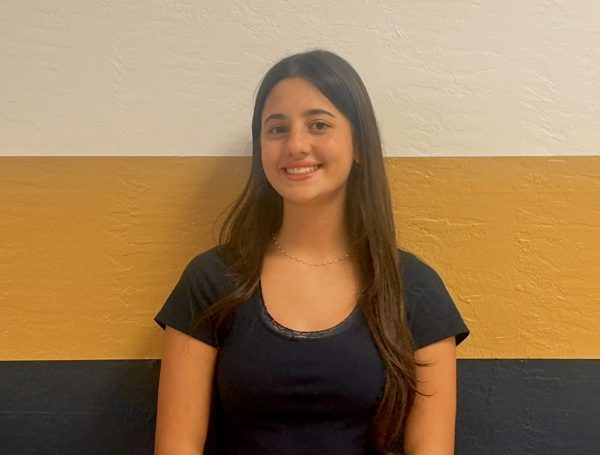
The younger generations are the power behind this vinyl revival since Gen-Z is the first generation to ever grow up entirely in the digital age. West Boca senior, Isabelli Lima, explains why she collects music in a physical format, “I collect vinyls because it’s another way to appreciate music. When you put the vinyl on the record player, it feels like the music has a new crisp sound to it, and it adds value to the art.”
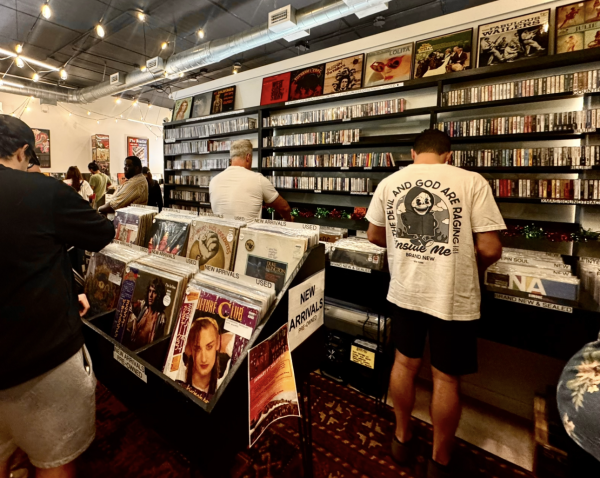
So having media in a physical format deepens our personal connection to it and deepens our sense of intentionality. Like for me, as a longtime vinyl collector, it makes listening to music more pleasurable, plus the gift of actually owning and taking care of them. It also gives the songs the proper life they’re meant to have by hearing them in higher quality and in a way that will last forever.
Collecting albums also allows me to look back at each of them and remember the moment I bought them, a specific time in my life, creating a stronger bond with music. I only purchase my favorite albums, so I make sure I buy them with the right intention. Because nowadays, with technology so easily available to us, we begin to lack doing things with purpose. Take a camera, for example, it’s so convenient to swipe up and take a shot of nothing significant, where before, taking a picture was a process where you’d slow down, and wait to capture the perfect moment that comes only once, and have in mind that you only have a certain amount of film left. This meant that we used to really consider what we wanted to capture or even listen to.
Additionally, for me, physically owning music feels like an “escape” from reality. Similarly to what Senior, Julia Quirino, who also owns LPs, said, “I listen to vinyls because I love the feeling of not using my phone for a while, to just sit in bed reading my book while listening to my favorite albums; or simply sitting in my room enjoying nothing but the songs, giving me a sense of comfort.” So analog media gives us a sense of freedom. In a world where infinite media and technology suffocate us and intrude on our preferences, purchasing analog media is a response to the urgency to wind down and live in simpler times. It’s a way to try and unchain ourselves from this obsessive relationship with modern technology.
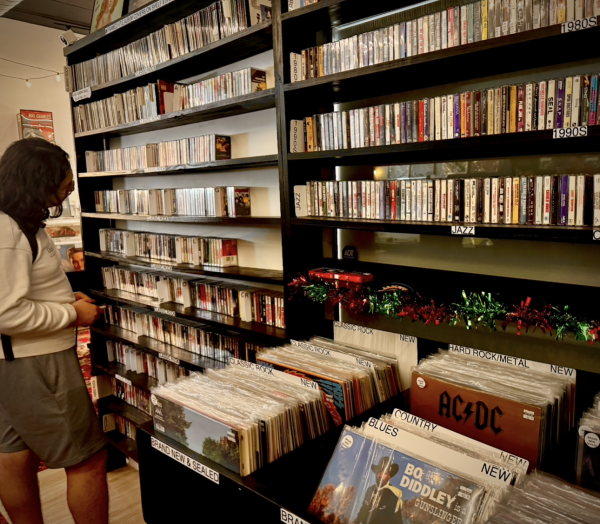
We have become tired of infinite everything, which becomes overwhelming and ultimately suffocating. So we long for a balance in a world that traps us within a media-heavy environment, where an algorithm tells us what to watch or listen to. So, people are rediscovering the tangible format of physical media, since everything we touch nowadays is a black mirror, we crave to feel something again. Even if it’s just feeling the paper, smelling it, and looking at it makes us feel closer to it, deepening our relationship towards the music or the artist.
Hopefully, this desire for connection will lead us to have a more balanced relationship with technology. In 2026, the surge in vinyl sales and value is expected to increase yet again, but although digital music will most likely never disappear, having and experiencing entertainment in a physical format, whether it’s DVDs, vinyls, or even a photograph, is essential because it reminds us of what’s real.

Guilhe • Feb 5, 2026 at 11:14 pm
Amazing article!!